
Introduction
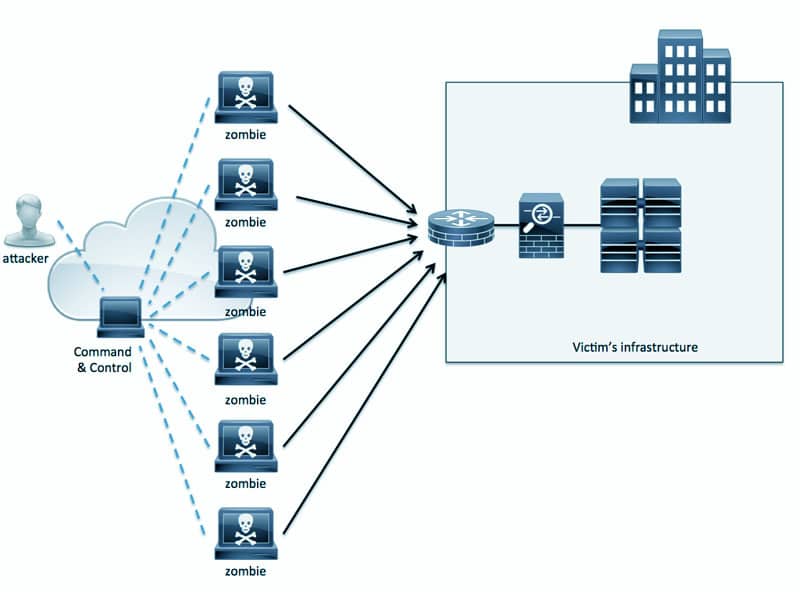
Historical record from 2014. This article describes the announcement or guidance at that time; it does not confirm today’s service arrangements, product support or security status. Distributed Denial of Service (DDoS) attacks are no longer simple floods of traffic. They are increasingly creative, varied, and difficult to mitigate. Industry experts agree: IT vendors must deliver stronger solutions to detect and stop these evolving threats.
DDoS protection in 2026
Since 2014, DDoS mitigation has largely moved upstream: carrier- and CDN-level scrubbing, cloud firewalls with always-on rate limiting, and managed detection and response now absorb most attacks before they reach your own network. Dedicated on-premises appliances still have a role for specific data-centre workloads. ICT Shift covers DDoS protection and response within its cybersecurity and business continuity services — see our security & continuity page for how we keep services available under attack.
The Challenge of Modern DDoS
- Encrypted traffic: Growing use of SSL/TLS makes it easier for attackers to hide malicious activity.
- Data center targets: Large enterprises and hosting providers are frequent victims of complex, high‑volume attacks.
- Escalating scale: Even well‑prepared organizations can be overwhelmed by massive traffic spikes.
Thunder TPS: A Purpose‑Built Anti‑DDoS Appliance
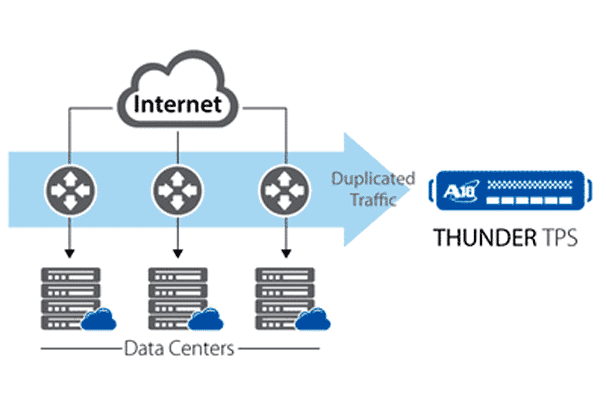
A10 Networks has introduced Thunder TPS (Threat Protection System), designed specifically for data centers and large enterprises.
Key capabilities include:
- Two‑pronged defense: Mitigates both the breadth and size of attacks.
- Flexible blocking: Supports regex rules and programmable policies via the aFlex tool.
- Robust SSL protection: Validates whether clients are legitimate or part of a botnet.
- Behavioral analysis: Uses 400+ destination‑specific counters to detect anomalies.
- Traffic handling: Inspects MPLS‑encapsulated traffic and uses NAT as an alternative to tunneling when sanitizing traffic.
Deployment Considerations
Thunder TPS is not a plug‑and‑play device. Successful deployment typically requires:
- Coordination with in‑house IT teams
- Support from A10’s deployment specialists
- Possible involvement of external IT professionals
Analysts also recommend pairing on‑premises appliances with cloud‑based or upstream mitigation for protection against extremely large attacks.
Conclusion
The arrival of dedicated anti‑DDoS appliances like Thunder TPS marks an important step in defending against increasingly complex threats. While no solution is invincible, combining on‑premises appliances with cloud‑based defenses provides enterprises with a layered, resilient approach to DDoS protection.