
Introduction
Distributed Denial of Service (DDoS) attacks are among the most disruptive threats in cybersecurity. By flooding a network with overwhelming volumes of traffic, attackers can slow down or completely halt operations, leaving legitimate users unable to access services.
How DDoS Works
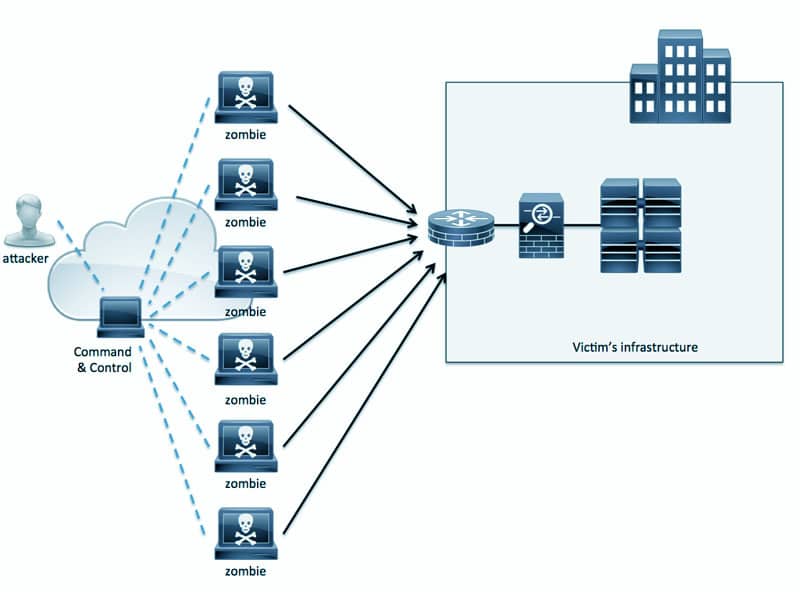
- Traffic overload: Attackers unleash massive volumes of traffic beyond a network’s capacity.
- Botnets: Compromised devices (“zombies”) are controlled by command servers to generate the attack.
- Targets: Web services, applications, and firewalls are common victims.
Think of it like a highway designed for hundreds of cars suddenly being swamped by thousands — traffic grinds to a halt.
Types of DDoS Attacks
- Simple floods: Nuisance traffic disguised as legitimate requests, overwhelming weak links.
- DNS attacks: Exploit the Domain Name System to amplify traffic.
- HTTP attacks: Target web servers with application‑layer requests.
Each variation has the same goal: deny service to legitimate users.
The Financial Impact
- Direct losses: Surveys suggest downtime costs range from $10,000 to $100,000 per hour, depending on the business.
- Duration: Attacks can last hours, days, or even weeks.
- Indirect costs: Customer service disruption and long‑term brand damage.
The result: DDoS doesn’t just hurt IT systems — it hurts the bottom line.
Can DDoS Be Eliminated?
- No permanent solution: Experts agree DDoS cannot be eradicated.
- Mitigation is key: The best approach is to reduce impact and control damage.
- Best practices:
- Assess current network strengths and weaknesses
- Implement layered defenses
- Partner with DDoS protection specialists or experienced IT security providers
Conclusion
DDoS attacks are here to stay, and their financial and reputational impact can be devastating. While they can’t be eliminated, organizations can mitigate the damage through proactive planning, expert partnerships, and resilient network design.