

Introduction
Big Data describes the enormous volumes of information generated and collected by organizations worldwide — from search engines and social platforms to enterprise systems. Collecting this data is costly and complex, but the real challenge lies in analyzing it to extract business value.
Apache Hive in 2026
Apache Hive is still in use for large-scale batch data warehousing, and the fundamentals in this article have not changed. The wider ecosystem has moved on, though: many new data platforms ship as managed cloud services (for example, Azure Synapse and Databricks), and lakehouse architectures combine data lakes with warehouse-style SQL. If you run legacy Hadoop or Hive on-premises, ICT Shift can plan and manage the migration to a platform that fits your cost, compliance and performance needs — see our cloud & infrastructure services.
The Challenge of Big Data
- Scale: Billions of records, multimedia files, and logs generated daily.
- Infrastructure: Requires 24/7 data centers with advanced hardware and software.
- Cost: Enterprises must justify the expense by turning data into actionable insights.
Apache Hive: A Data Warehouse for Big Data
Apache Hive is an open‑source data warehouse software that:
- Facilitates querying and managing large datasets in distributed storage
- Runs on top of Apache Hadoop, which enables distributed processing across clusters
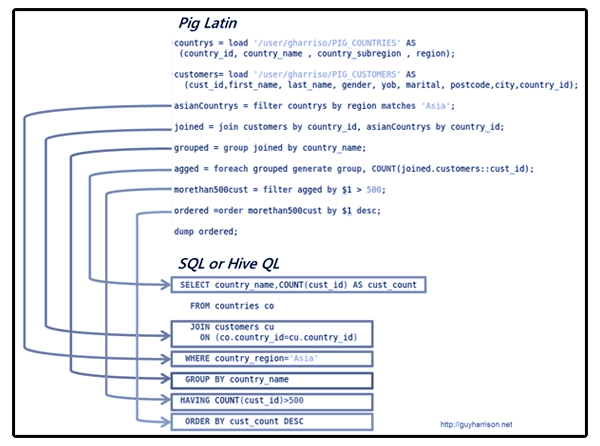
- Uses HiveQL, a SQL‑like language, to make querying accessible to analysts
How Hive Works with Hadoop
- HDFS (Hadoop Distributed File System): Stores massive datasets across clusters.
- MapReduce: Processes multi‑terabyte datasets in parallel.
- Apache Pig: Provides a higher‑level platform for producing MapReduce programs.
- HBase compatibility: Hive can also query data stored in HBase and other systems.
Together, these tools allow organizations to extract, transform, and analyze data at scale.
Why Hive Matters for Business
- Scalability: Start with a few servers and scale to thousands.
- Fault tolerance: Hadoop detects and handles failures at the application layer.
- Accessibility: SQL‑like queries make Big Data analysis easier for non‑developers.
- Value extraction: Turns raw data into insights that drive decision‑making.
Implementation Considerations
Deploying Hive and Hadoop requires:
- Robust IT infrastructure (compute, storage, and networking)
- Skilled professionals to configure and maintain clusters
- Careful planning to align analytics with business goals
Conclusion
Apache Hive, together with Hadoop and related tools, makes Big Data analytics practical and powerful. With the right infrastructure and expertise, organizations can transform massive datasets into meaningful insights that support growth and innovation. For data platform architecture reviews and roadmaps, see our strategic ICT consulting.


