
Invoice fraud prevention depends on verifying payment instructions through an independent, trusted channel. A familiar email address, convincing invoice layout or existing conversation does not prove that changed bank details are genuine. The mailbox itself may have been compromised.
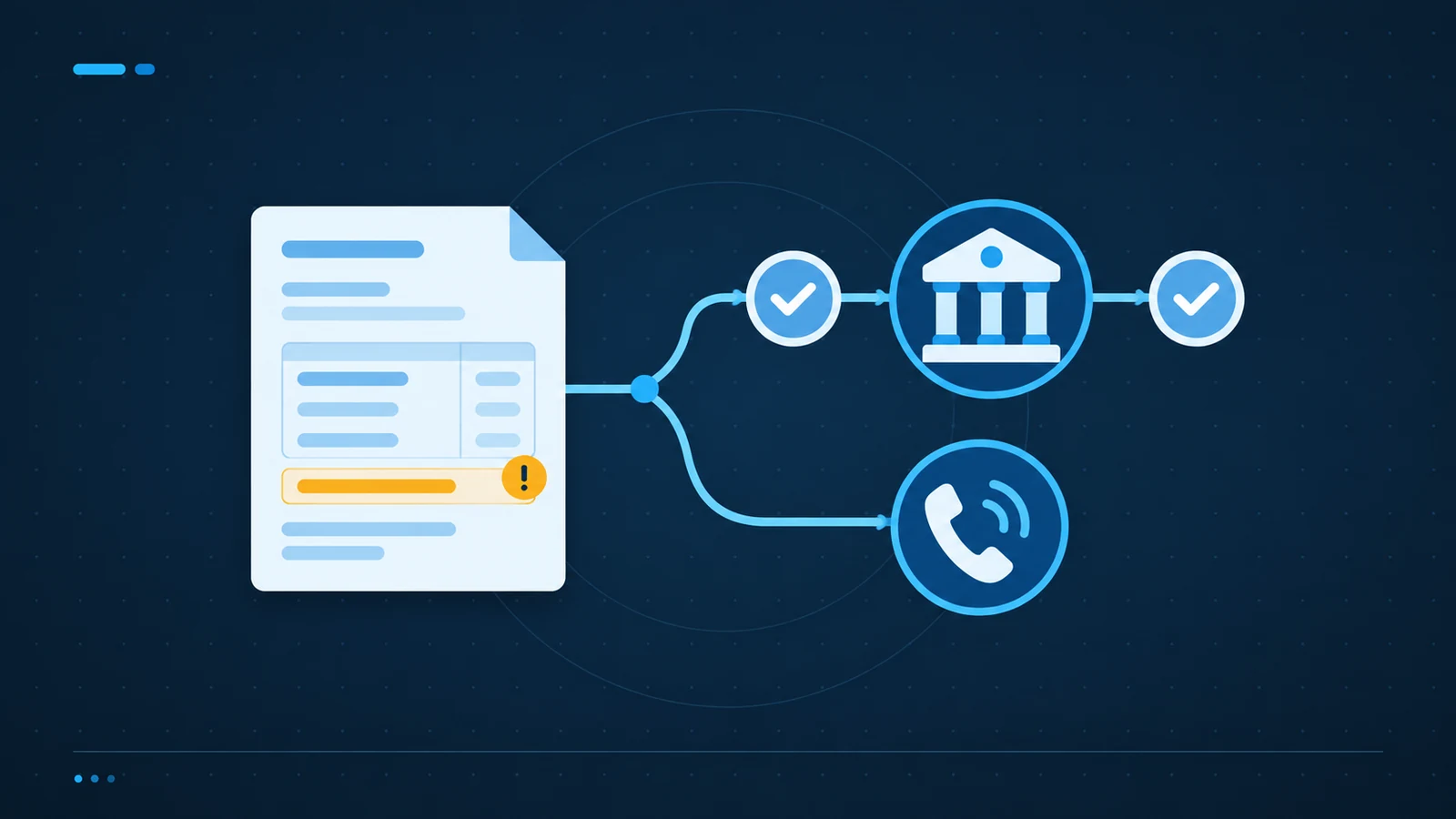
Pause bank-detail changes until independently verified
- Separate approval of the invoice from approval of its destination account.
- Use supplier contact details already held in trusted records.
- Record verification and require the agreed independent approval.
- Check the actual destination again when authorising payment.
Treat changed payment details as a separate request
Separate an invoice’s business approval from approval of the destination account. A real purchase can still arrive with fraudulent payment instructions. Ask staff to flag new suppliers, bank-account changes and unusual urgency rather than treating them as routine administration.
Do not make confirmation depend on replying to the same email. An attacker controlling that conversation can provide reassuring answers. Keep an approved supplier contact in your records, maintained through its own verification process.
Call a number you already trust
Verify a bank-detail change with the supplier using independently held contact details. Do not use a replacement telephone number in the change request. If your usual contact is unavailable, pause the change and follow the escalation procedure instead of improvising a shortcut.
Voice or video alone is not conclusive proof of identity either. Unexpected urgency, a different contact and an exception to the usual process together deserve scrutiny. Record who performed verification, who was reached and when, without storing unnecessary personal data.
A changed account number needs a separate decision
Fictional scenario: an existing supplier emails new bank details. A convincing message or a familiar conversation is not sufficient verification.
Unsafe shortcut
- Reply to the same email asking whether the change is genuine.
- Use the new phone number included in that message.
- Update the supplier and approve the payment without a separate check.
Controlled route
- Pause the account change.
- Verify it through independently held supplier details and the approved escalation process.
- Record the check, obtain separate approval and confirm the payment destination.
Require separate approval before money moves
Where practical, separate supplier-record changes from payment authorisation. Configure your accounting or banking workflow so one person cannot silently change the account and approve the transfer. Check the actual destination at payment time, not just the supplier’s displayed name.
Use bank-provided beneficiary checks where available, but investigate mismatches and do not treat a matching result as a guarantee. Review how these controls work during holidays and absences. A process that disappears when the finance manager is away is not dependable.
If a payment may be fraudulent, act promptly
Contact your bank immediately through its established fraud channel and ask what recovery or recall steps are available. Recovery is not guaranteed. Notify the supplier through a trusted route, preserve the original message and relevant records, and involve your IT or incident-response contact.
Check whether your own or the supplier’s mailbox may be involved. Review forwarding, access and other pending payment requests before assuming the problem is isolated. Assess reporting and personal-data obligations with the responsible advisers; do not accuse a named party before the facts are established.
Turn the checklist into a practical next step
Technology supports this process but cannot replace independent financial approval. ICT Shift’s Cybersecurity & Business Continuity reviews and Cloud & Infrastructure management management address the accounts and systems behind it. To review those controls with your finance team, talk to an engineer.
Sources and further reading
Microsoft: compromised accounts; NCSC: small organisation security.