
Introduction
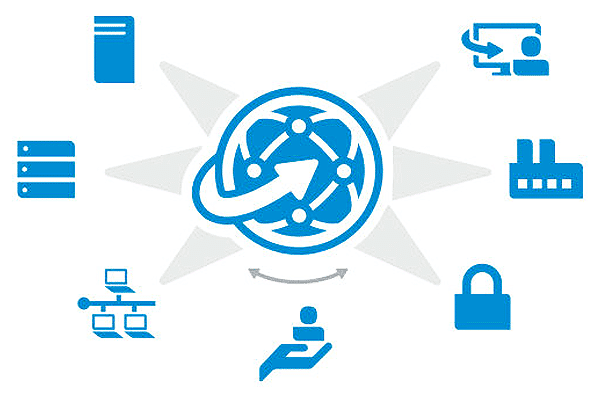
Converged infrastructure is about creating a single, optimized IT package by combining storage, servers, networking, and management into one integrated system. Instead of piecemeal solutions, convergence delivers interoperability and efficiency through resource pools built on a common platform.
Why Convergence Matters
- Unified resources: All core IT components are engineered to work together.
- Virtualization as the foundation: Virtualization enables abstraction of servers, storage, and networking into flexible, manageable pools.
- Network as the backbone: The network is both a target for convergence and the “connecting tissue” that binds physical resources to the virtual layer.
The Role of Cloud and Virtualization
The rise of cloud computing has accelerated convergence by requiring abstraction of IT components into virtual resources.
- APIs distribute resources from hardware pools to applications.
- NaaS (Network as a Service): Connects compute, storage, and applications while supporting application-level connectivity.
- SDN (Software Defined Networking): Provides the flexibility and control needed to make NaaS effective.
Three Approaches to SDN
- Virtual Overlay Networks
- Substitute for traditional VPNs
- Multi-tenant model with partitioned services
- Centrally Controlled SDN
- Uses a software controller (e.g., OpenFlow) to manage traffic
- Rules applied across all devices for unified control
- Non-Centrally Controlled SDN
- Relies on APIs for software control
- Builds on existing protocols to converge current devices into future SDNs
Market observers note that a unified SDN model combining these approaches is already emerging.
Conclusion
Converged infrastructure transforms IT by simplifying management, improving interoperability, and leveraging virtualization and cloud technologies. With NaaS and SDN driving flexibility, businesses can achieve greater efficiency, scalability, and readiness for future demands.